
- Home
- About Us
-
Consular Services
- Passport Services
- Visa Services
-
OCI
- Overview
- General information on OCI card
- How to apply for OCI
- Documents required for OCI Card
- What to do after issuance of new passport
- OCI Personal Particulars Updation
- Instructions to Convert PIO Card to OCI Card
- Renunciation of OCI Card
- FAQ's on OCI Related matters
- Processing time for OCI applications
- Discontinuation of PIO to OCI Conversion Facility
- e-OCI
- e-Visa
- Renunciation of Indian Citizenship
- Miscellaneous Consular Services
- Re-issuance of International Driving Permit (IDP)
- Emergency Travel Document (Emergency Certificate - EC)
- Global Entry Program (GEP) For Indian Nationals
- VFS Helpline Numbers
- ICWF Fees
- Advisory for visitors to India
- Consular advisory on fake call
- PAN Card for NRI/PIO ?
- Aadhaar Card for NRI/OCI/PIOs
- Community Affairs
- Media & Culture
- Bilateral Relations
- Energy
-
Commerce & Eco
- Exhibitions and Trade Fairs in India
- Commercial Representative
- Emerging Technologies Initiative
- Doing Business with USA
-
Manufacturers and Exporters in India
- India: Leather Exports
- www.fieo.org
- www.indiamart.com
- www.indianyellowpages.com
- www.tradeindia.com
- www.exportersindia.com
- DISCLAIMER: Links given to other Internet sites should not be construed as an endorsement / promotion of external websites by the Consulate General of India, Houston. This Consulate does not take responsibility for the content therein. It does not endorse, approve, or certify such information, nor does it guarantee the accuracy, completeness, efficiency, timeliness, or correct sequencing of such information. They are given solely for access to prima facie information.
- Investing in India
- Information for NRIs
- India's Foreign Trade Policy
- India's Customs Import Tariff
- Taxation
- Useful Links
- Education
- Contact Us
- Türkçe (Turkish) Türkiye
- English
- Hindi (हिन्दी)
- Indian Languages
- Assamese (অসমীয়া)
- Bengali (বাংলা)
- Gujarati (ગુજરાતી)
- Kannada (ಕನ್ನಡ)
- Malayalam (മലയാളം)
- Marathi (मराठी)
- Nepali (नेपाली)
- Odia (ଓଡ଼ିଆ)
- Punjabi (ਪੰਜਾਬੀ)
- Sanskrit (संस्कृतम्)
- Sindhi (सिन्धी)
- Tamil (தமிழ்)
- Telugu (తెలుగు)
- Urdu (اردو)
- Konkani (कोंकणी)
- Maithili (मैथिली)
- Dogri (डोगरी)
- Manipuri (মৈতৈলোন্)
- Bhojpuri (भोजपुरी)
- Other Languages
- Spanish (Español)
- French (Français)
- German (Deutsch)
- Russian (Русский)
- Arabic (العربية)
- Japanese (日本語)
- Chinese (中文)
- Portuguese (Português)
- Italian (Italiano)
- Korean (한국어)
- Indonesian (Bahasa Indonesia)
- Persian (فارسی)
🔊 Speaking...
CCUS Policy Framework & Deployment Mechanism
Carbon Capture Utilization and Storage (CCUS)
India is the 3rd largest emitter of CO2 in the world with estimated emissions 2.6 Gtpa (2019)
Key elements of CCUS Framework
-
Regional hub and cluster models need to be establishes to drive economies of scale
-
CCUS policy based on Carbon credits/incentives, to promote CCUS sector in India
-
Preferential procurement in Government tenders for low carbon or carbon abated products
-
Incentivize carbon capture by establishing regulated emission levels & allowances
-
Protection of communities and jobs especially in sector affected by clean energy regulations
-
De-risk CCUS projects by limiting CO2 liability/ownership in the value chain & monitor through MVA.
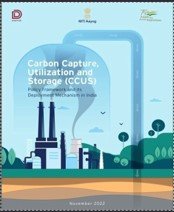
Source: PIB
What's new?












Copyright © 2026 Consulate General of India Houston. All Rights Reserved.
Website content managed by Jadon Webtech Pvt Ltd